Total Pageviews

Wednesday, 9 December 2015

Death ruled to be Suicide

Well once again the pit haters are proven wrong but I can guarantee you dogsbite.org won't remove this poor victims death from their statistic list in spite of their claim to remove anything proven to be inaccurate.


The Oakland County Medical Examiner's office has ruled the death of a 22-year-old Port Huron woman mauled by dogs Thursday as a suicide.
Ray Jankowski, an investigator for the medical examiner's office, said Rebecca Hardy's death was caused by multiple injuries. The manner of her death was ruled a suicide.
Investigators have said Hardy climbed over a fence into a backyard at 1721 10th St., where she was attacked first by a pit bull and then by a pit bull-husky mix. The reason Hardy entered the yard has been unknown.
A witness attempted to stop the dogs from attacking Hardy. The dog owner eventually was able to subdue the dogs and provide aid to Hardy.
Hardy had extensive injuries to her face and neck. She later died at Beaumont Hospital.
The two dogs and a pit bull-husky mix puppy were euthanized the next day.
As of Tuesday, the incident remained under investigation.
Further information was not immediately available.
Check back for updates.
A dog is led from a 10th Street home Thursday, Dec. 3, 2015, after an attack that left a female victim with extensive injuries. Beth LeBlanc/Times Herald


Well I'll be buggered they actually did! rather begrudgingly though I must say?

BREAKING UPDATE: Coroner rules pit bull mauling death of Port Huron woman a suicide. This is hands down the most upside down, and truly unbelievable, fatal dog attack we have ever seen. ‪#‎NoWords‬ ‪#‎PortHuron‬‪#‎Suicide‬ ‪#‎PitBulls‬
The DogsBite.org blog tracks U.S. dog bite fatalities, dog bite statistics, severe pit bull attacks, breed-specific dangerous dog laws and dog bite victims' issues.
BLOG.DOGSBITE.ORG
2 people like this.
Comments
Tina Lynn Whitebear Seriously? Suicide? This would be the worst suicide attempt ever. May she RIP
248 mins
DogsBite.org It is does not make any sense at all.
Lannie Damon This absolutely reprehensible and unacceptable ! I can't imagine a "Fiance" who would defend those two monsters who brutally killed the woman he loved. Yes this is as upside down as everything else in a society that places very little value on life.

Woe to those who call evil good and good evil, who put darkness for light and light for darkness, who put bitter for sweet and sweet for bitter! -Isaiah 5:20
148 mins


It's sad for all involved that's what it is R I P.


Breed-specific legislation unfairly targets pit bulls BY BOBBIE URTEZ

Following the death of a 4-year-old who was attacked by a pit bull, there is sure to be talk of laws that are specific to that breed of dog, but these laws unfairly punish all pit bull owners. (courtesy of Wikipedia)
Following the death of a 4-year-old who was attacked by a pit bull, there is sure to be talk of laws that are specific to that breed of dog, but these laws unfairly punish all pit bull owners.
(courtesy of Wikipedia)
The talk of breed-specific legislation is sure to come up after a 4-year-old boy was fatally attacked by a pitbull in Detroit, Michigan.
Breed-specific legislation refers to government regulations pertaining to a specific breed — most often being American pit bull terrier, American Staffordshire terrier and Staffordshire bull terrier. The regulations typically include sterilization or banning of the animals from a particular neighborhood, according to DogsBite.org, a non-profit education website.
This legislation punishes all pit bulls for the violent outbursts made by only a few of them, which is unfair.
In a 10-year period, between 2005 to 2014, DogsBite.org reported that there have been 203 deaths caused by pit bulls. While the number may be uncomfortably high, each case must be assessed individually. In situations involving children, there was poor dog supervision; in situations involving the elderly, multiple dogs were reported without the presence of a dog owner, according to DogsBite.org.
In CNN’s report of the dog attacking the 4-year-old boy, the dogs were a pre-existing problem for the neighborhood. In a case such as this, the specific animal in question should be reported to animal control to ensure that is receives the necessary care, rather than creating laws that punish all animals of the breed.
The long-lasting issue of whether the problem lies with the owners or if the breed itself is to blame will likely never end. There are constant back and forths of “for all the pits that do attack, there are thousands that don’t” and “how many victims must there be before something is done?”
When people opt to get a pet, they are cautioned that pets—like children— are a big responsibility. What people fail to realize is yes, pets are exactly like children, and pit bulls, much like children, can be raised in hostile and dangerous environments and still be rehabilitated and live a full life, said Julie Castle, chief development, marketing and communication officer of Best Friends Animal Society, in a TED Talk.
While the intentions of the legislation are good, placing a ban on the animals would only cause the owners to illegally house them and in doing so, there would be less of a way for owners to provide a higher quality of life for the animals. Banning pit bulls will make them sheltered and unsocialized, therefore making them more hostile to other animals and unfamiliar humans, according to Pit Bull Rescue Central, an online shelter and resource center.
An unpopular answer is to compromise. It is true that an entire breed of dog cannot be blamed for the terrible acts of a few, but there should be some sort of reasonable regulation. Instead of banning the dogs, why not limit the amount an owner may have? If someone is a registered breeder, why not document what is done with the dogs that are not sold?
As some pit bull owners say, “punish the deed, not the breed.”


WHAT?! Pit Bull Who Refused to Leave Hoomans Side After Fire Kicked Out of Town


A loyal Pit Bull named Precious ought to have been feted as a local hero after standing guard over her unconscious human, April Newell, when a fire broke out in their home in Prince George County, Maryland. Instead, she found herself being kicked out of town!
When firefighters arrived at the scene, they discovered Precious standing over her beloved human, and knew that she was “scared, confused, and feeling protective. She became slightly aggressive when strangers tried to approach, but was easily frightened off by the sound of a fire extinguisher.” Her obvious desire to keep Newell safe from harm was regarded as deeply moving.
However, Prince George’s County has enacted Breed Specific Legislation (BSL), which bans Pit Bulls from living in the area … so when local authorities got wind of Precious and her puppy Molly’s presence in Newell’s home, they demanded that they both be run out of town! Luckily, Newell’s sister Megan Sanchez, who lives in an area without BSL, stepped in and offered to provide the dogs with a new home.
“(Precious) just wanted to protect her mommy, that’s all,” Sanchez said. “I’m glad they survived. We’re animal people.”
While Newell is grateful that her beloved pooches will now be living with family members rather than strangers, she added, “It hurts so much … and I wish she was right here beside me right now”
The incident clearly demonstrates the perils of BSL – which is almost invariably aimed at Pit Bull-type dogs, even when they, just like Precious, have proven that they possess a sweet, loving nature. While the current mainstream mythology around Pit Bulls revolves around the breed’s supposed “viciousness,” it is not as well known that these dogs were once termed “nanny dogs” because of their gentleness and loyalty toward their humans.
BSL has been condemned by groups as diverse as the American Society for the Prevention of Cruelty to Animals (ASPCA), the American Veterinary Medical Association (AVMA), the Center for Disease Control and Prevention, and the American Bar Association. The laws are regarded as costly to enforce and problematic for civil liberties, and there is little to no evidence that they actually improve public safety.
The ASPCA’s stance is that the most cost-effective way of reducing violent tendencies among dogs of any breed is to simply get them neutered. They have noted that “intact males constitute 80 percent of all dogs presented to veterinary behaviorists for dominance aggression, are involved 70 to 76 percent of reported dog bite incidents, and are 2.6 times more likely to bite than neutered dogs.” Appropriate training and socialization are also vital to ensuring that a newly adopted dog. Whenever a dog turns aggressive, this problem can nearly always be attributed to cruel treatment, irresponsible guardianship, or inadequate training on the part of their human companions.
Because of prejudices many people have about the breed, Pit Bulls are among the least likelytype of dog to be adopted from animal shelters, and the most likely to be euthanized. Luckily, BSL is on the wane, with many U.S. states choosing to abandon it. However, there is still a lot of work to be done before lingering prejudices against Pit Bull-type dogs are fully erased. You can help combat the stigma by checking out the articles below:
Lead Image Source: Life With Dogs

5 Commons Myths That Fuel Wrongful Stigmas Against Pit Bulls

Although most people believe that the term Pit Bull applies to one specific breed of dog, it is actually a general term that can refer to a number of breeds including the American Pit Bull terrier, the American Staffordshire terrier, Staffordshire bull terrier, as well as others.
Regardless of the title you prefer, controversy is practically synonymous with the Pit Bull name.
It’s thought that descendants of the Pit Bull were trained in Europe as bull-baiting dogs in the 1800s, but by the 1930s, Pit Bulls were admired here in the U.S. for their friendly and trustworthy nature. During this time, the Pit Bull was one of America’s sweethearts, featured in advertisements and by the sides of celebrities and politicians alike. Sadly, by the time dog fighting made a comeback in the 1980s, the perception of this once idolized breed changed drastically.
In the late 1980s and early 1990s, breed specific legislation (BSL) that prohibited families from keeping Pit Bulls (due to their “inherently aggressive and dangerous nature“) passed in Denver and Cincinnati. During this time, law enforcement went door-to-door and physically removed family pets that had never had any prior incidents. If the guardians weren’t able to find a third party that resided outside of the city, the dogs were euthanized.
For years, Pit Bull guardians and advocates have fought BSL and attempted to clear the stigma that has followed Pits relentlessly. These discriminatory laws, however, continue to plague the breed leading to extremely high euthanasia rates across the U.S. Thousands of family pets have been euthanized due to BSL; today, there are at least 700 cities that have passed some level of BSL.
These attempts to ban and regulate select breeds are incredibly ineffective and ignore a much larger problem. There is no evidence that banning breeds has any impact on the number of violent incidents related to the breed. Further, extensive research from the National Canine Research Council found that abuse, mismanagement or neglect by the dog’s guardian are leading factors in dog bite incidents, not the dogs “inherent” nature. Aggression in any breed can to some degree be hereditary, but the environment in which the dog is reared also plays an important role. Perhaps, instead of placing blame on the dogs, we need to first look into passing tighter legislation surrounding animal abuse, animal neglect and dog fighting.
It is far past time that we put negative myths about Pit Bulls to rest. Check out these 5 common myths and share them with everyone you know! No dog should have to suffer because of our ignorance.

1. Pit Bulls Have Locking Jaws

Part of the reason that people fear Pit Bulls is the myth that they can lock their jaws when they bite. The concern is that if a Pit Bull were to bite a person, it would be near impossible to get the dog off, leading to fatal injuries.
Contrary to popular belief, there is no evidence to suggest that Pit Bulls can lock their jaws once they’ve gotten a hold of something. Although some critics dispute that the Pit Bull can be trained to “not let go” and act in an aggressive manner, they cannot “lock” their jaws. In fact, according to top veterinarians, no dog breed is capable of locking their jaw.

2. Pit Bulls Have the Strongest Bite Force of Any Breed

A dog’s bite force is often determined by several factors. Dr. Brady Barr of National Geographic tested the bite force of the American Pit Bull terrier, the German Shepherd, and the Rottweiler and found that the Pit Bull actually had the least bite force of the three. Despite dozens of statistics published yearly by various sources citing the Pit Bull breed as the leading cause of bites in the country, these reports are often unreliable. There is no evidence to show that Pit Bulls actually bite people more than any other breed.

3. Pit Bulls can “Turn” on Their Guardians Without Warning

Pit Bulls that are raised in loving and stable environments have the ability to be just as successful as any other dog. On the other hand, a dog that is raised in an abusive or unstable environment will certainly be more inclined to display acts of aggression; this does not mean that a Pit Bull is more like to “turn” on their guardian more than any other dog, however.
More importantly, many dogs will display behavioral signs signifying the potential for aggression prior to the attack, Pit Bulls included. These behaviors may vary and can at times be subtle or misinterpreted, but they are displayed nonetheless.
There is no measure that indicates Pit Bulls are inherently aggressive; those that do display aggressive behaviors are often victims of abusive owners who have trained them to act in this way. When a dog does suffer from some form of aggression, options are available. There are many groups that are successful in rehabilitating dogs and when owners are willing to put in the effort and work with the trainers, those dogs can make wonderful loving pets. As Sam Basso simply states, “Almost all forms of aggression can be controlled through training and supervision. If this wasn’t so, then we couldn’t use dogs to do police work.”
5 pit bull myths

4. Pit Bulls are the Most Dangerous Breed

It’s estimated that there are 70 million homeless dogs and cats in the United States, with only six to eight million surrendered to shelters every year. Of those six to eight million, one in four animals surrendered to shelters is a Pit Bull, likely because these dogs are falsely listed as “world’s most dangerous breed” by a number of unreliable media outlets. These groups often assert that Pit Bulls are responsible for more bite-related fatalities than any other breed. However, the American Veterinary Medical Association has publicly stated that it isn’t possible to calculate accurate bite rates for breeds, “[because] mixed breeds are commonly described as purebreds … [and] the actual number of bites that occur in a community is not known … if they did not result in serious injury.”
Although Pit Bulls have been responsible for attacks on humans and animals, other breeds like the Chow ChowHuskyDobermanGerman Shepherd and Rottweiler have also been implicated in similar attacks. The difference is that the media tends to sensationalize Pit Bulls more frequently, likely to play off existing tensions/fears regarding these dogs.

5. Pit Bulls Aren’t Good With Kids or Other Animals

Pit Bulls who are properly socialized and confident are fully capable of cohabitating peacefully with children and other animals – as with every other dog breed. There is no evidence to suggest that Pit Bulls are simply not good with children because of their breed. In fact, Pit Bull’s are historically known for being “nanny” dogs due to their loyalty and gentleness around children. The American Temperament Testing Society (ATTS) tested over 122 different dog breeds to evaluate their aggression, skittishness, and ability to differentiate between threatening and non-threatening humans. The Pit Bull was awarded a score of 86 percent out of 100 for good temperament, making them the second most tolerant breed after Golden Retrievers.
With that being said, precaution should always be taken when allowing a child to interact with a dog, regardless of the breed.
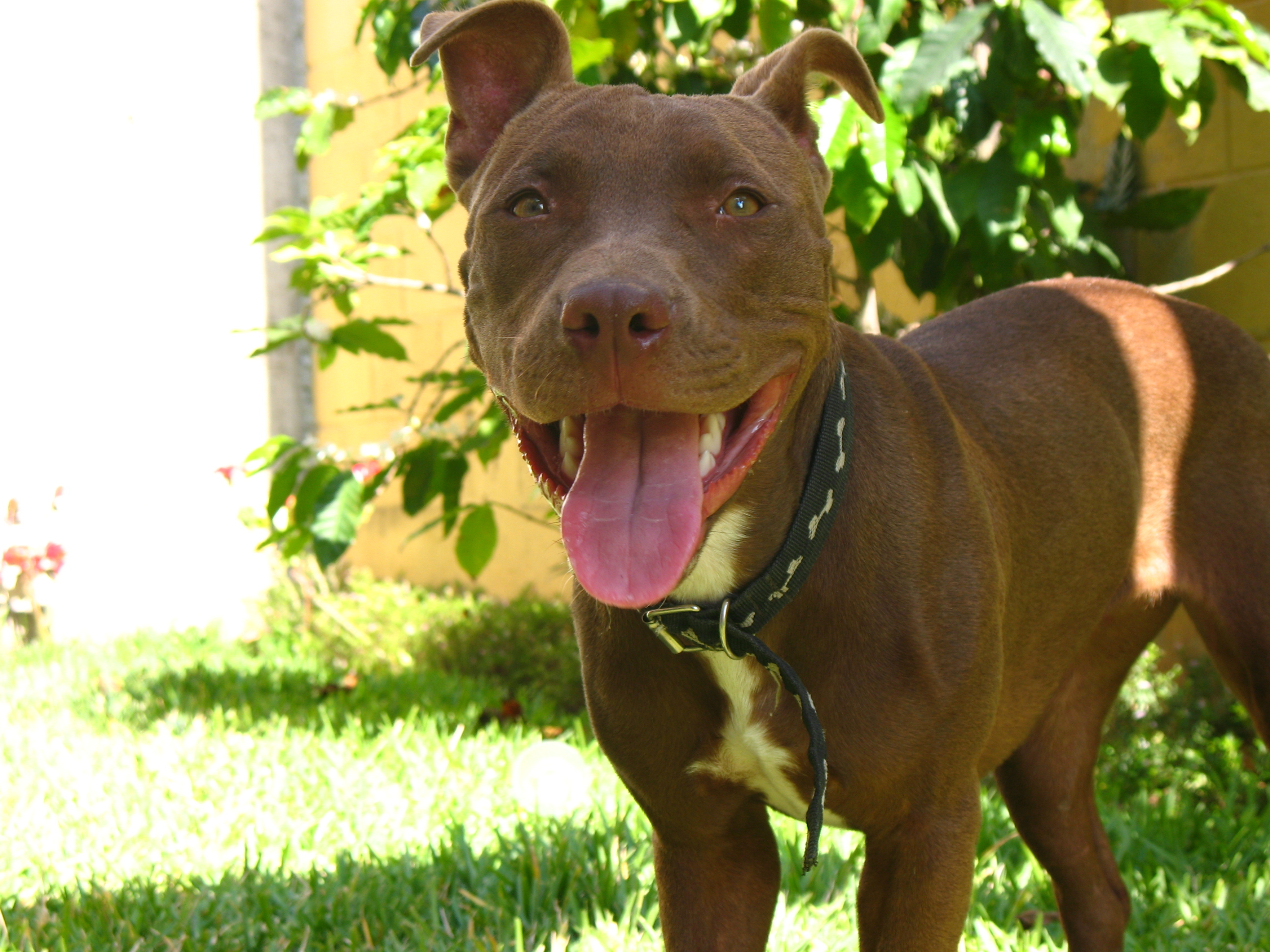
5962458537_7271368c0e_zRuss/Flickr

Lead image source: Maplegirlie/Flickr
See something, Say something. Bookmark, share and help further build our directory ofAnimal Rescue Hotlines and let's be prepared to help animals today!