JACQUE LYNN SCHULTZ, DIRECTOR, ASPCA SPECIAL PROJECTS
In a full service shelter, recognizing one breed from another improves lost and found reporting enabling owners to be reunited with their pets faster and opening up cage space quicker.
Shelters that continuously misidentify dogs to purebred rescue groups will find that their calls soon go unanswered – dismissed as just another “boy cries wolf” scenario. And when adoptables are improperly identified, it is the adopter who pays – unless the animal comes back to the shelter after someone at the vet’s office or on the street accurately identifies the breed type and the new adopter feels “had” by the organization.Just like Mom always said, “Honesty is the best policy.”
Starting this month I will be writing a breed identification column which I hope will enhance your knowledge of breed types – primarily canine since that’s where breed difference plays the biggest role – so that the Petfinder breed index is a more accurate tool for potential adopters. As more groups sign on and the list gets larger, accuracy will be even more important. So, let’s get started!
THE PIT BULL & PIT BULL MIX
There is probably no other breed type that demands accuracy more than the pit bull (and pit mix). Since adopters may find that owning this type of dog prohibits them from living in certain communities or demands that they purchase prescribed amounts of liability insurance or muzzle their dog when off home turf, they must know what they are taking on.
Let’s call a pit bull, a pit bull. Just because he’s black doesn’t make him a Labrador mix or because she’s red, she must be a Pharaoh hound. And a brindle coat does not a Whippet make!
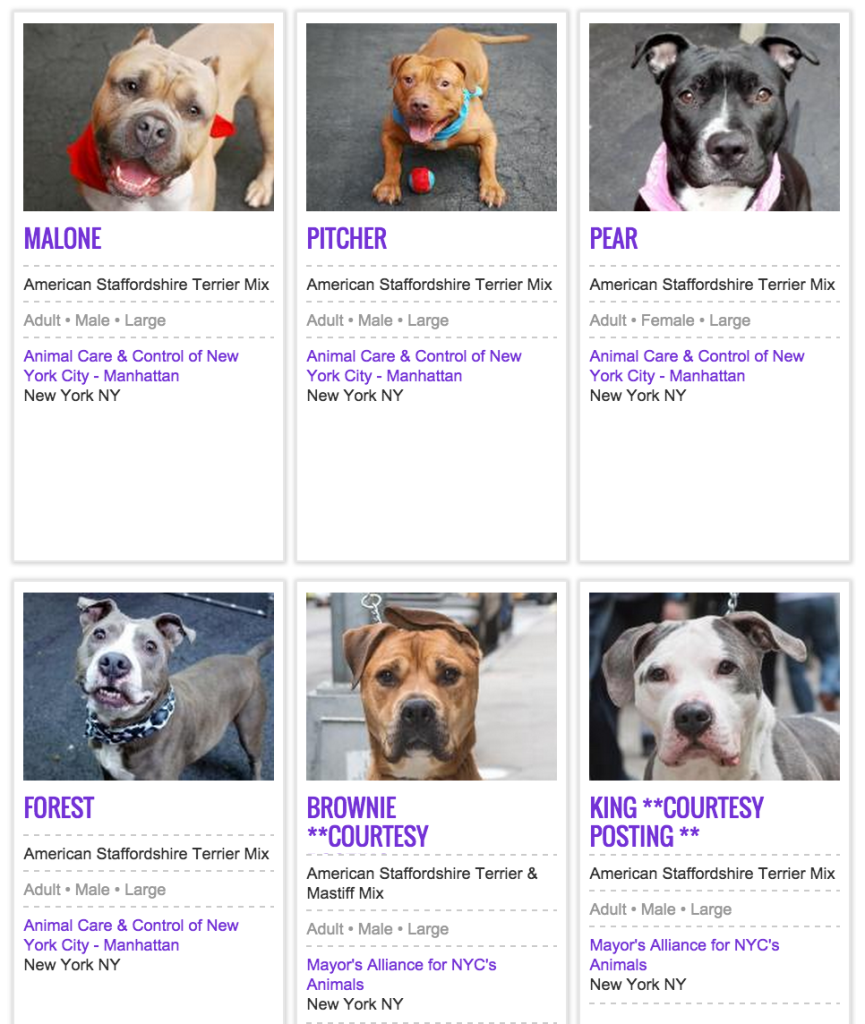
If the dog before you has many of the following physical characteristics, he/she should most likely be identified as a pit bull or pit mix:
Very short, hard, glossy coat of any color or markings
Ears that are either cropped or medium-sized and folded
Broad, blocky back skull and jaws Wide mouth that gives the appearance of grinning when opened
Stocky, well-muscled body with a broad chest or sometimes a little gangly with a leaner, more wiry form
Adult weight of 30-80 lbs., occasionally heavier males
High activity level, engages in lots of jumping and tugging action
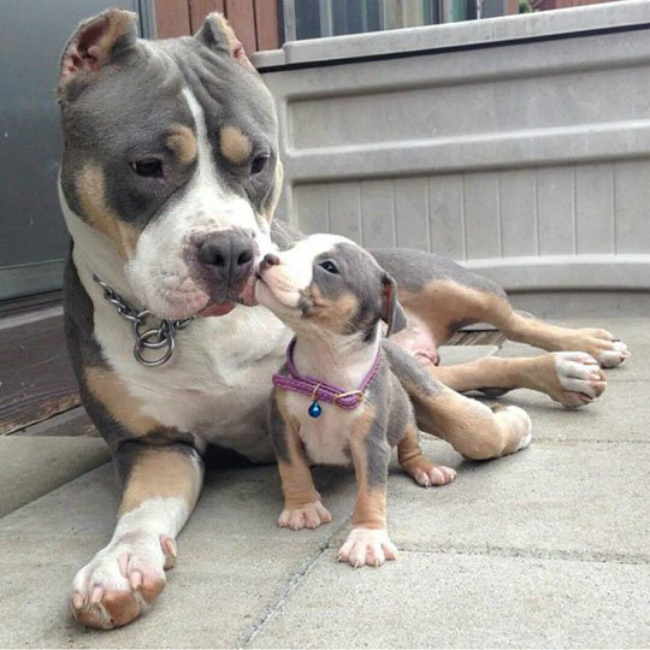
Bonds quickly and deeply
Quick reactivity, may be very aroused around other dogs
Courtesy of 424 East 92nd Street New York, NY 10128-6804 www.aspca.org
BSL has proven time again to be a costly, ineffective way to address the issues of dangerous dogs in communities. The trend nationwide is away from BSL in favor of breed neutral dangerous dog laws. As with light rail, Kansas City is woefully behind the times. Knee jerk reactions, media inspired hysteria and political grandstanding has led several cities to enact BSL. We urge dog owners of all breeds to reject this unfair, unconstitutional and wasteful use of tax payer money.
“Ban them all!”
Although experts agree that aggression is almost always ownership based, breed-specific laws are typically rationalized by saying that certain breeds are inherently more dangerous. This argument usually stems from news of a serious attack by a dog and perpetuated by media coverage of the incident. Often the knee-jerk reaction to a serious attack is to look to laws that regulate or ban the specific breed of dog as a way to try to ensure public safety. Later though, public officials learn that this is not an effective solution.
The truth is singling out certain breeds only provides a false sense of security. Breed-specific laws do nothing to address the proven factors that contribute to a dog’s likelihood of displaying dangerous behavior such as…
Owner irresponsibility
Abuse and neglect
Being inhumanely chained
Not being spayed or neutered
Dogs roaming at-large
The following animal and medical experts agree that singling out certain breeds isn’t justified and doesn’t really provide greater safety:
American Veterinary Medical Assn.
Missouri Veterinary Medical Assn.
Kansas City Veterinary Medical Assn.
American Academy of Pediatrics
American College of Emergency Physicians
Professional Liability Insurance Trust
American College of Veterinary Behaviorists
American Medical Association
National Animal Control Association
U.S. Center for Disease Control
Humane Society of the United States
ASPCA
American Kennel Club
National Canine Research Foundation
If certain dog breeds aren’t inherently more dangerous, why do some breeds seems to be responsible for more bites than others? Bite statistics can often be misleading. More popular breeds are going to reflect a greater number of bites because there are more of these dogs in the general population. Statistics can also be misleading because dogs are often misidentified.
Bite statistics usually don’t indicate the severity of the bite either. Was medical attention required? Was the person hospitalized? Statistics also don’t tell us if the bite was a reasonable response or unprovoked. Was the dog neglected or abused? Was the dog protecting his property or his owner? Or did the dog “snap” for no reason? We simply can’t tell from bite stats.
Not only are bans ineffective, but there are other noteworthy disadvantages to consider.
Are costly to enforce with no real benefit
Place unreasonable restrictions on responsible pet owners
Jam-up the animal control system with too much time and resources focused on certain dogs, most of which are not dangerous.
Don’t stop irresponsible owners from choosing another breed of dog and raising them to be dangerous too.
Infringe on constitutional rights and leave cities vulnerable to lawsuit.
Unfairly target any dog having similar characteristics of the banned breed
As long as humans and dogs interact, dog bites will always be a risk. The key is to take reasonable steps to reduce the frequency of bites. Practical steps that have proven effective include:
Dog bite prevention education programs for adults and children
Restricting the chaining of dogs
Spaying/neutering incentive programs
Strict fines and felony penalties for owner irresponsibility
Once one breed has been restricted or banned by a city it makes it even easier for other breeds to be targeted. Who can say your dog won’t be next?
In cities across the country many different breeds have been regulated or considered for regulations, including some that might surprise you…
Blue Heelers
German Shepherds
Golden Retrievers
Labradors
Pugs
Rottweilers
All Terriers
Dogs over 50 pounds
…and many more!
Want to Know More?
Check out the following resources to learn more about why breed-specific laws don’t work:
As a Pit Bull owner and advocate, it breaks my heart knowing that Pit Bulls make up the largest percentage of dogs in shelters across the United States. My dog, Guybrush, was saved at just five months of age from the Manhattan AC&C. He was on the at-risk list four years ago last month, and if it hadn’t been for my fiancée, he probably would’ve died, just like so many other Pit Bulls. Not because he was a bad dog. Not because he had behavioral issues. But because he was an owner surrender and there were just too many dogs like him waiting to be saved.
I didn’t really have an opinion of Pit Bulls at the time. I mean, I knew that there were those in the world who had negative associations with them, but I also knew that that was nonsense. It wasn’t until Guybrush that I learned how amazing and loyal and affectionate they can be. And not just because of Guybrush – once you fall in love with one Pit Bull, you fall in love with all Pit Bulls. I can’t count how many times I’ve met a Pit Bull since, and they’re all the same – they just want to lick your face and be your best friend.
But it’s not enough to just love these dogs and talk about how great they are. It’s also important to confront the challenges associated with them, and one of the biggest is the vast intake of Pit Bulls in shelters. The question is, why are there so many? And why are they dying in such large quantities every day?
This probably seems like a silly question, but it’s important that we lay out precisely what we mean when we refer to Pit Bulls. A Pit Bull, of course, isn’t a breed; it’s an umbrella term that most people use to refer to different types of dogs – the American Pit Bull Terrier, the American Staffordshire Terrier, the Staffordshire Bull Terrier, any mixes thereof, and any dog that vaguely resembles these dogs.
While there are those who would disagree with the inclusion of, for example, the Staffordshire Bull Terrier as a “Pit Bull-type” dog, the reality is that, in practice, all of these dogs are Pit Bulls in the eyes of the law. All of these dogs make up the “Pit Bulls” that are sitting in shelters across the country right now, waiting for their forever home, oftentimes in vain. So for the purposes of this article, that’s what I’ll call them.
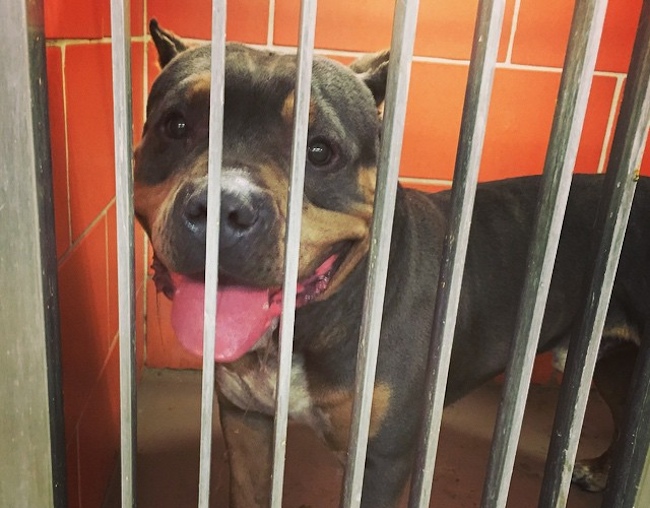
Each year, 1.2 million dogs are euthanized, approximately 40% of whom are Pit Bulls. This means that nearly half a million Pit Bull-type dogs are killed in shelters annually. Of all the common dog types to appear in shelters, Pit Bulls are by far the most likely to be euthanized, while they’re only the third most likely to be adopted.
This is obviously a big question, and one with a lot of components. But as far as I can tell, there are two primary reasons for Pit Bull intake in shelters being as high as it is.
One, overpopulation: Whether it’s backyard breeding or casual breeding or just plain breeding, there’s way too much breeding of Pit Bulls going on. It doesn’t help that Pit Bulls tend to have large(ish) litters, anywhere from 6-12 puppies per litter (sometimes it’s more, and sometimes it’s less).
The second reason? Breed Specific Legislation and Pit Bull Prejudice. I referred previously to the challenges associated with Pit Bulls. Mainly, I was talking about the shelter problem (as I previously indicated) and BSL/prejudice, which can make it extremely difficult for families to take in – and sometimes keep – Pit Bulls.
First, let’s delve into the Pit Bull breeding issue – and let there be no doubt that it is, indeed, an issue. Obviously, if the country’s shelters are full of Pit Bulls waiting to be put down – and if Pit Bulls are being killed at such an insane rate (599 to 1) – there’s too much breeding going on, plain and simple.
“I can tell you some trends. Pit Bull-type dogs are increasingly more and more popular. There’s more registrations for Pit Bull dogs – whether they’re American Bulldogs or Staffordshire or American Pit Bull Terrier – and we’re seeing more of them come into […] vets. That tells us, where we tend to see more dogs in homes, we tend to see more dogs in shelters. [Popularity is] likely a very big part of it.
“Whether it’s backyard breeding or folks casually breeding or even breeding for financial reasons, when we see that there are more [dogs] in people’s homes, we can intuit that more are being bred.”
That’s right, one of the big reasons so many Pit Bulls are ending up in shelters is that they’re becoming more and more popular with each passing year. Of course, we’ve known for some time about this increased popularity. In 1993, Pit Bulls made up less than 1% of the overall dog population in this country. Ten years later, that percentage had increased fivefold, and that’s just of the dogs that were registered. In the 12 years since, you can bet that the Pit Bull population has only grown larger.
Moreover, in a 2012 study conducted by VetStreet, the American Pit Bull Terrier ranked among the top 3 pets in 28 states, and was number one in Rhode Island (which not so long ago passed a law prohibiting BSL). That’s a long way to go for a dog that was once feared far and wide thanks to media hysteria.
In many ways, popularity is a good thing. Popularity means that Pit Bulls are being viewed in a more positive light. It means that prejudice against them is decreasing, and as a result, so, too, is Breed Specific Legislation. Not only are fewer states, cities, and counties resorting to BSL – which has been proven time and again to be costly and ineffective – but many states/cities/counties are softening their anti-Pit Bull laws, and in some cases repealing them altogether.
Obviously, few people are going to suggest that we actively attempt to make Pit Bulls unpopular as a means of decreasing their number in shelters. But to a degree, if these dogs are popular, they’re probably always going to rank a bit higher in terms of shelter intake than, say, the Mexican Hairless Dog. After all, the Labrador Retriever – America’s most popular dog – ranks number 3 in shelter intake.
RELATED
Dogfighting Explained – In Pictures
Then again, if Labs rank number one in popularity and number three in shelter intake – and Pits rank number one in shelter intake and somewhere lower than number one in popularity – there has to be more at work here than mere demand. Which brings us to our next point:
There are countless reasons Pit Bulls end up in shelters, just like all dogs. Sometimes they’re picked up as strays, sometimes their owners pass away, and sometimes people are just selfish and cruel and throw them away like yesterday’s garbage. By and large, these things can’t really be mitigated. There will always be strays. There will always be owners who pass away. And there will always, unfortunately, be cruel and selfish people who should never have owned dogs in the first place.
But there are other reasons, too, ones we can and should fight against. The big one is Breed Specific Legislation. There are so many places across this country that outright ban the ownership of Pit Bulls. A sample? Denver, CO. Miami, FL. Council Bluffs, IA.: The list goes on and on.
It’s because of BSL that so many Pit Bulls end up in shelters in these areas. Some of them are lucky enough to be pulled by rescues and taken elsewhere, but many of them are just put down.
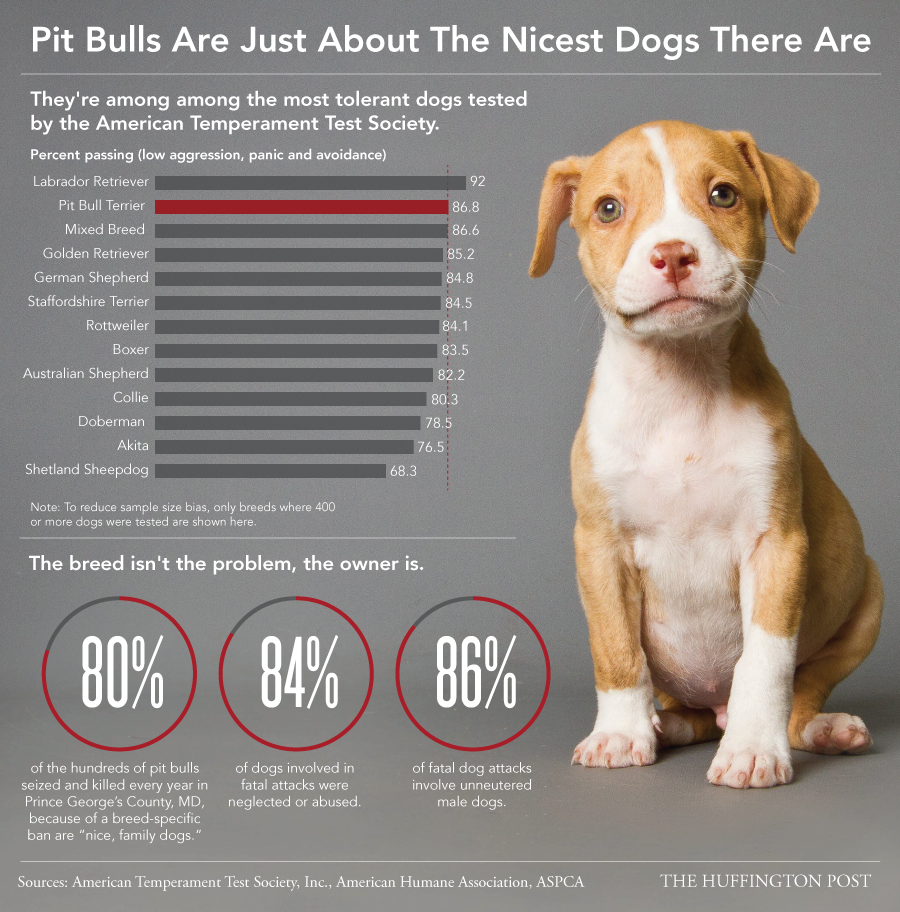
I talked a little bit about how costly and ineffective BSL is, but it bears repeating. Study after study has shown that banning Pit Bulls does not decrease dog bites, and in fact merely increases dog bites from non-Pit Bull breeds like Labradors and Boxers. This proves that whatever statistics you can find about Pit Bulls attacking people more often than other dogs are an example of correlation, not causation. All things being equal, Pit Bulls rate incredibly high in temperament tests. Higher, even, than Golden Retrievers and many other breeds.
But BSL is merely one form of Pit Bull prejudice. Another is more insidious and pervasive, and perhaps more difficult to fight against. It’s the prejudice of landlords and insurance companies.
While there may be more families now than ever who are willing to bring Pit Bulls into their homes, it’s not always possible for them to do so. Many landlords refuse to rent to families with Pit Bulls. Many insurance companies allow the denial or cancellation of coverage if a homeowner owns a Pit Bull. (Note to pro-Pit Bull home owners: Go with State Farm, Farmers, United Services Automobile Association, Chubb Group, Amica, or Auto-Owners Insurance.) Sometimes families with Pit Bulls lose their homes, and they find it next-to-impossible to find Pit Bull-friendly apartments, which ultimately – and tragically – leads to them surrendering their dogs to shelters.
It’s this kind of prejudice that makes it more difficult to adopt out Pit Bulls from shelters. People are afraid to adopt them for fear of how it’ll affect their living situations. In some cases, they’re completely incapable of adopting them. And until we deal with these issues, Pit Bulls will continue to be the most commonly euthanized dog in shelters, to say nothing of the intake.
I understand the impulse to vilify shelters in all of this, as they’re the one’s euthanizing these dogs, but the reality isn’t so black and white. Sure, there are examples of malpractice in shelters, just as there are examples of malpractice in every form of public service.
For the most part, though, these people are doing what needs to be done in a very imperfect world. And if they didn’t do their job, it would just mean many dogs would die a slower, more painful death from lack of space, lack of food, and lack of care (among other things).
By no means is this an exhaustive article that details every facet of why Pit Bulls appear in shelters in such large numbers. The truth is, there’s just not enough research about a great many things to do with the issue, which makes extensively talking or writing about it a bit difficult.
As for solutions to the Pit Bull shelter problem – well, there’s no quick fix. Nevertheless, we can and should strive to fix it, and in the process, improve things to the best of our ability.
Some of what needs to be done comes down to education. We need to educate people about the benefits of spaying and neutering. We need to educate potential dog owners about adopting Pit Bulls instead of buying them from backyard breeders. We need to educate people about the wonders of Pit Bulls generally, so BSL and Pit Bull prejudice from landlords and the like can be a thing of the past, or at the very least, less frequent.
50 the Two-Legged Pit Bull & Rude Dog of Six Legs Foundation
We also need programs that help Pit Bulls and Pit Bull owners in need. For example, if you adopt a Pit Bull from the AC&C of NYC, spays/neuters are free. If you fall on hard times and are having trouble keeping your dog, the Six Legs Foundation can help. The Mr. Mo Project saves senior dogs (and primarily Elderbulls) from certain shelter death. The New York Bully Crewdoes an incredible job of rescuing Pit Bull-type dogs just about every day of the year. And the list goes on. Support these programs and non-profits, so they can go on supporting the dogs we love so much.
Like I said, it’s not enough to just love Pit Bulls and talk about loving them, we also have to fight for them. Because, let’s be honest, we’re the reason they need fighting for in the first place.
Editor’s Note: A previous version of this article used questionable statistics from Animal People.